




Vibe coding is the practice of describing what you want in plain language and letting an AI assistant generate the code. Tools like Cursor, Replit, GitHub Copilot, and Google AI Studio brought this coding approach to millions of developers in 2025. It makes building software dramatically faster, but it creates a new problem: how do you trust AI code you didn’t write? This guide explains what vibe coding is and how to test AI-generated code before it reaches your users.
The speed is real, and so is the risk. An AI writes a new feature in minutes, the demo works, the code merges, and the question of who verified it often stays unanswered. That gap is where most vibe coding failures start, and it’s what this article focuses on.
What is Vibe Coding?
Vibe coding is a new kind of coding where you describe the outcome you want in natural language, and an AI model writes and debugs the implementation. Computer scientist Andrej Karpathy coined the term in February 2025 in a post on X, where he described giving in to the vibes while large language models handled the syntax. The idea: the developer focuses on intent while the AI handles the code, often through natural language prompts typed into a code editor.
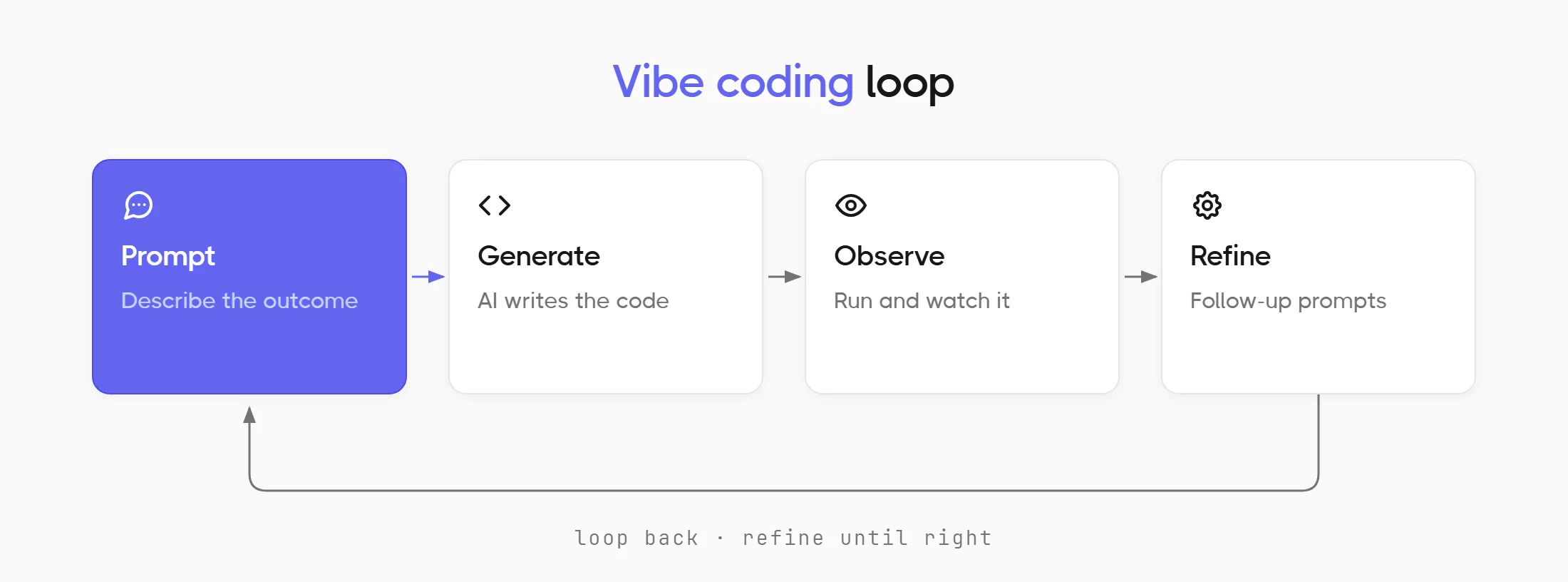
The workflow is a loop. You describe what you want, the AI will generate the code, you run and observe, then you refine with follow-up instructions until it’s right. At its most exploratory, Karpathy framed it as almost forgetting the code exists, which suits throwaway weekend projects. Professional use is different: the developer reviews the output and takes ownership of what the AI produced.
The vibe coding tools driving this shift range from ai-assisted editors like Cursor and GitHub Copilot to agentic ai systems such as Replit Agent and Google Antigravity, which can plan and execute changes across a full codebase. Google AI Studio, Anthropic’s Claude, and other generative AI platforms power most of them. The result is a coding platform layer that lowers the barrier to entry and makes building software accessible to non-programmers.
| Aspect | Traditional coding | Vibe coding |
|---|---|---|
| What you write | Exact syntax, line by line | Plain-language prompts describing intent |
| Main focus | How the code is built | What the result should do |
| Speed | Slower, manual implementation | Features in minutes |
| Main risk | Human error in known patterns | Unverified code with hidden edge-case and security gaps |
Adoption climbed fast. By 2026, using vibe coding moved from a hobbyist trend into how a large share of software gets built, including at professional teams and startups shipping full web apps. The testing question isn’t academic anymore.
Read also: Test Case Generation Using LLMs
Why AI-generated Code Needs Different Testing
AI coding tools are built to make something work quickly. The happy path, the main flow you described in your prompt, usually works. The edges are where things break, and those edges are exactly what a quick functional check misses.
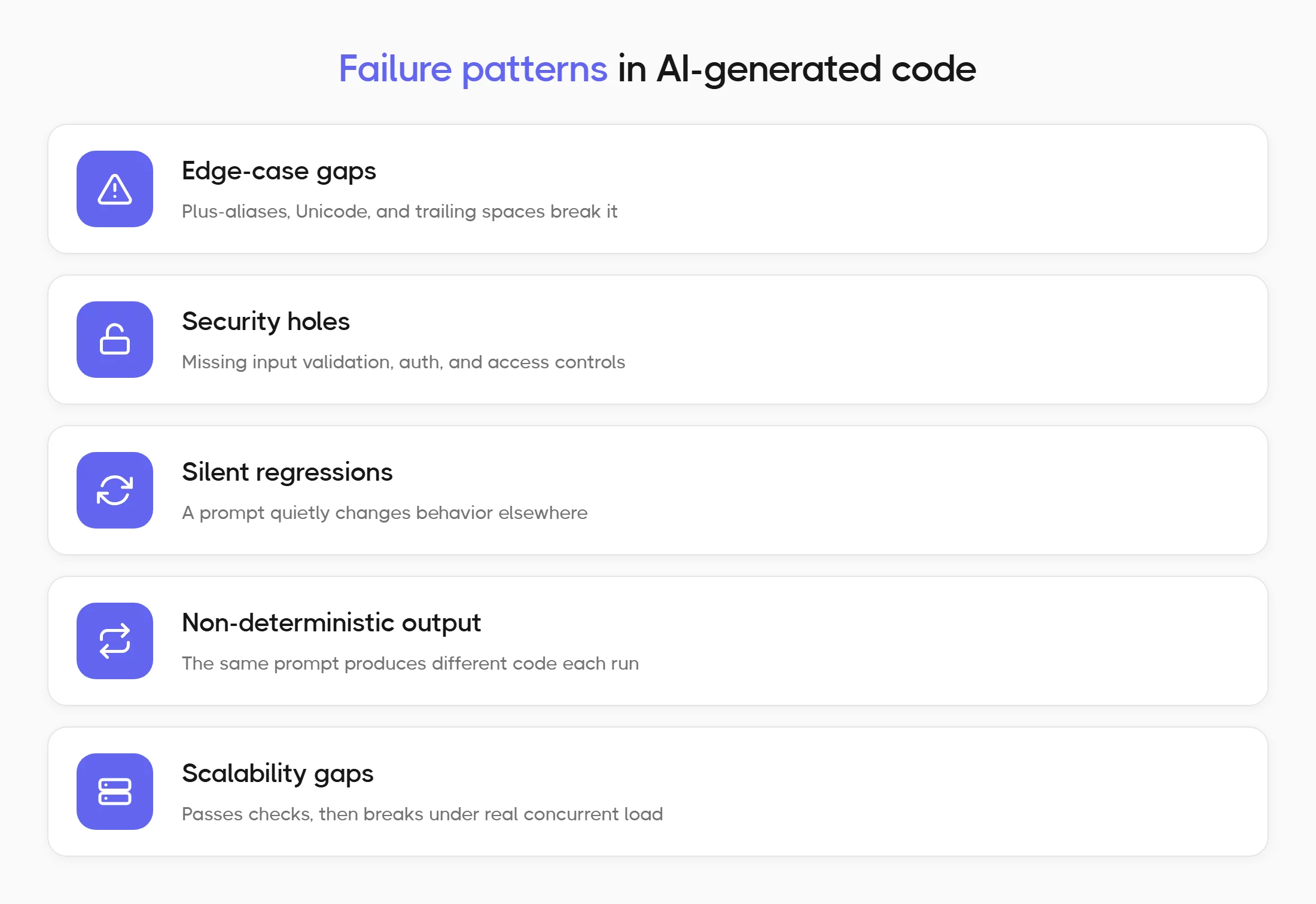
The common failure patterns in AI-generated code are:
- Edge-case gaps. The AI builds for the example you gave it, so a signup form described with a standard email can mishandle plus-sign aliases, Unicode characters, or trailing spaces.
- Security vulnerabilities. Generated code often omits fundamentals such as input validation, access controls, and proper authentication.
- Silent regressions. A new prompt can quietly change behavior elsewhere, and nothing flags it without a regression suite.
- Non-deterministic output. The same prompt can produce slightly different code each time, so fixed assertions don’t always hold.
- Scalability blind spots. Code that passes a functional check is rarely tested under real concurrent load, which is why many vibe-coded MVPs break under real traffic.
Industry research in 2026 confirms this. A CodeRabbit analysis of 470 open-source pull requests found that AI-co-authored code contained roughly 1.7 times more major issues than human-written code, with logic errors and misconfigurations markedly higher. Separate security assessments found that a large share of AI-generated code fails basic OWASP Top-10 benchmarks. The pattern is consistent: the code looks clean and passes linting, which is exactly why the defects go undetected without deliberate testing.
There’s a wider cost too. In February 2026, GitHub described a surge of lower-quality AI-generated contributions overwhelming open-source maintainers, an effect some called an Eternal September for open source. The lesson is the same for any team. Treat AI-generated code the way you’d treat code from a fast, capable, but unsupervised new contributor: useful, and in need of independent verification before it touches production.
Read also: AI for Quality Assurance: Automating Modern Testing Workflows
How to Test Vibe-coded Apps: A Layered Approach
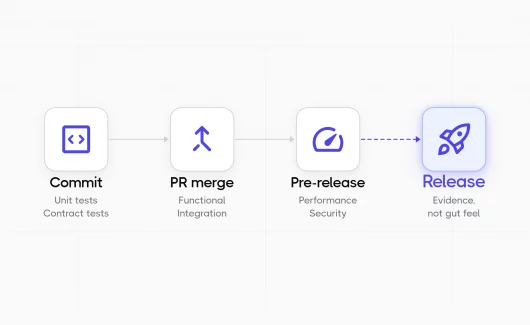
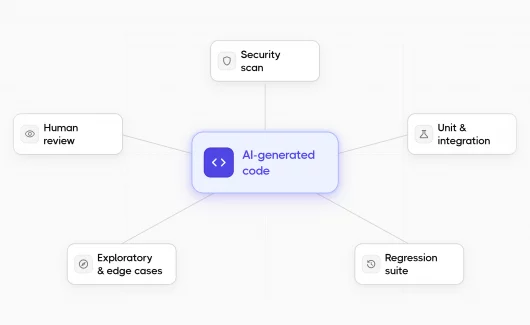
You don’t need to slow vibe coding to make it safe. You need a verification layer that keeps pace with it. The vibe coding QA approach teams are adopting in 2026 stacks several checks, each aimed at a different failure mode.
- Security scanning as a CI gate. Make automated security scanning a mandatory step in the pipeline, so nothing merges without passing it.
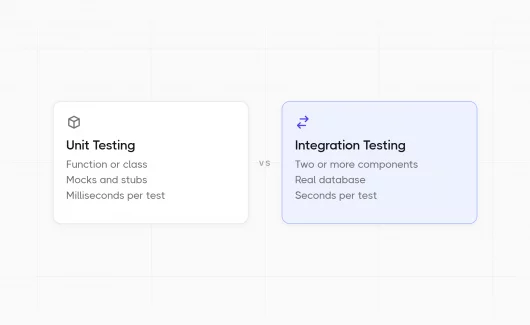
- Unit and integration checks. Confirm individual functions behave correctly and that components work together, not just that the demo runs.
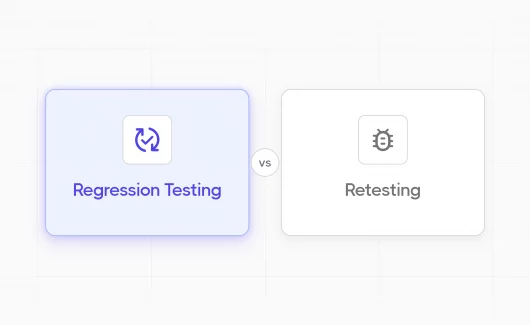
- Risk-based regression testing. Protect your highest-value flows first, and rerun the tests a change is likely to affect so silent regressions surface early.
- Exploratory and edge-case testing. Probe the inputs the prompt never mentioned: the capital-letter email, the mid-checkout refresh, the back button after submit.
- Human review before release. A person reviews anything customer-facing for security, correctness, and quality before it reaches users.
This is the practical version of the vibe and verify workflow: generate fast, then validate rigorously. The layers matter more than any single tool, because each one catches something the others miss.
What Vibe Testing is, and What It is Not
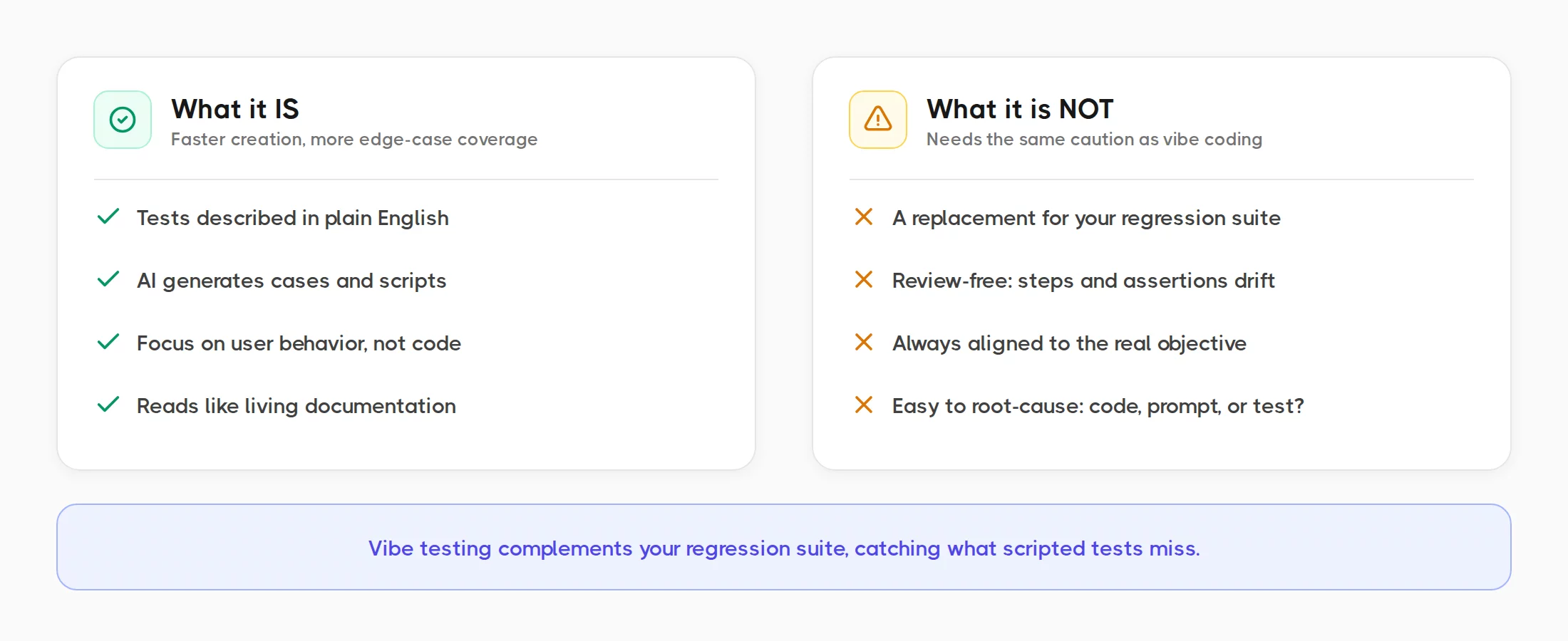
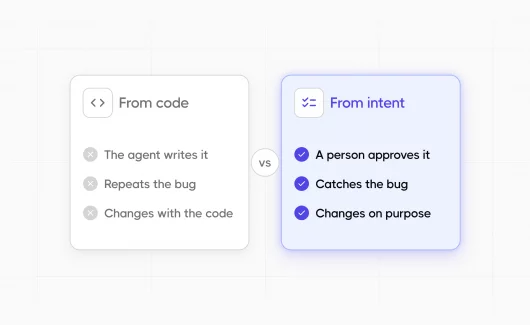
Vibe testing applies the same natural-language idea to QA. You describe the tests you want in plain English, and an AI generates the test cases or automation scripts. The focus is on how the software behaves for a real user rather than the line-by-line implementation.
The appeal mirrors vibe coding: faster test creation and coverage of edge cases a human might skip. The tests also read like living documentation. The caution mirrors it too. AI-generated tests need human review, because auto-generated steps and assertions don’t always match the real objective, and root-cause analysis gets harder when a failure could originate in the generated code, the prompt, or the test itself. Vibe testing complements a regression suite rather than replacing it, catching what scripted tests miss while the scripted suite catches known regressions.
Where Testomat.io Fits
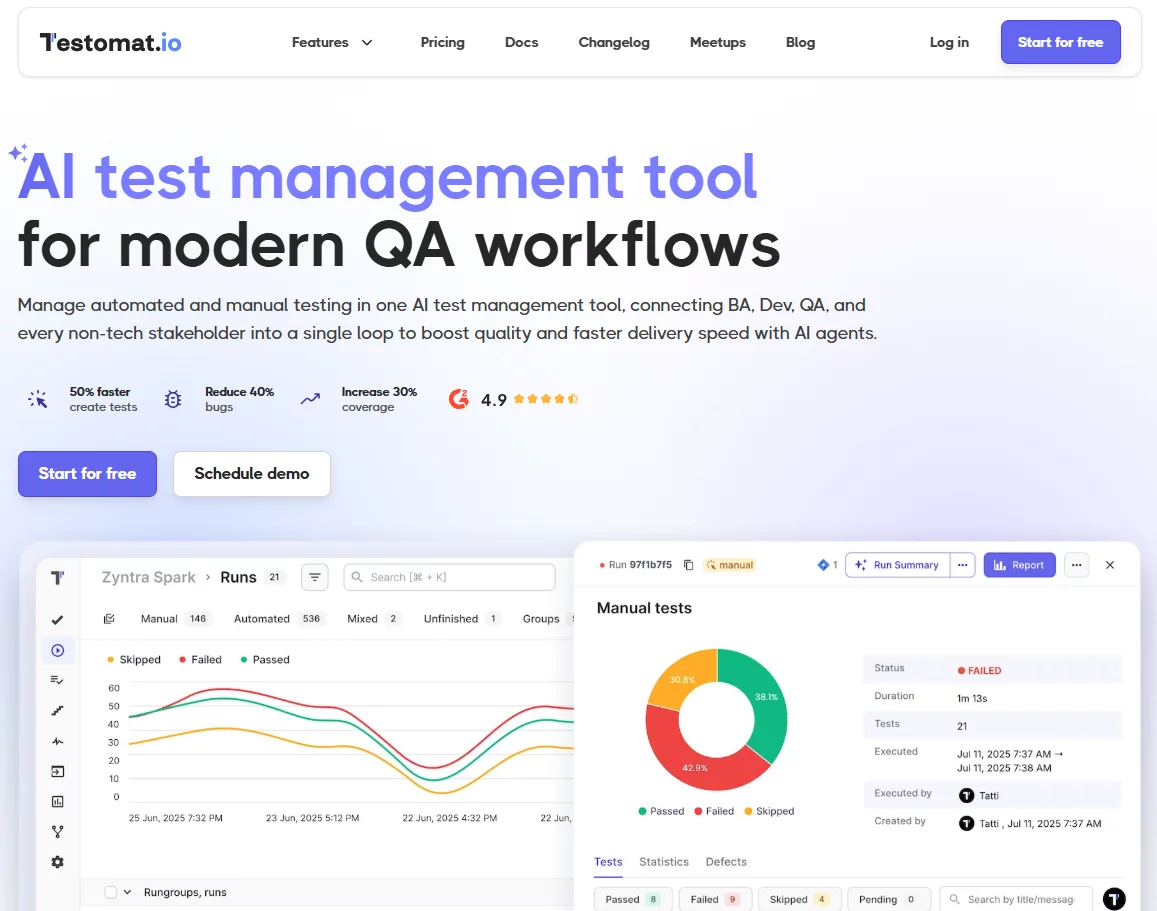
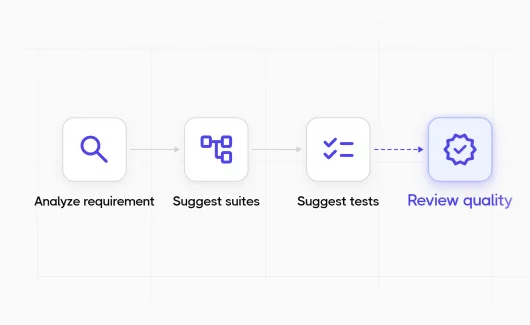
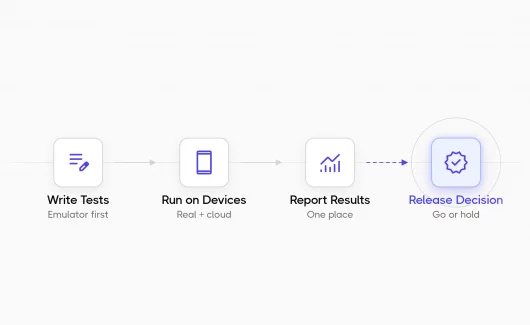
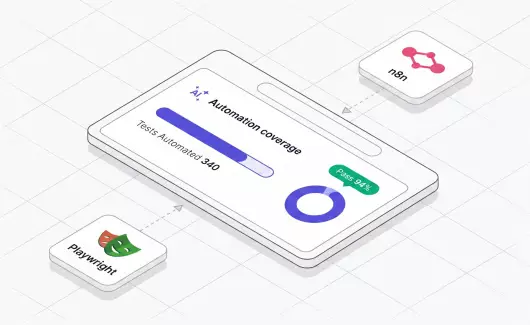
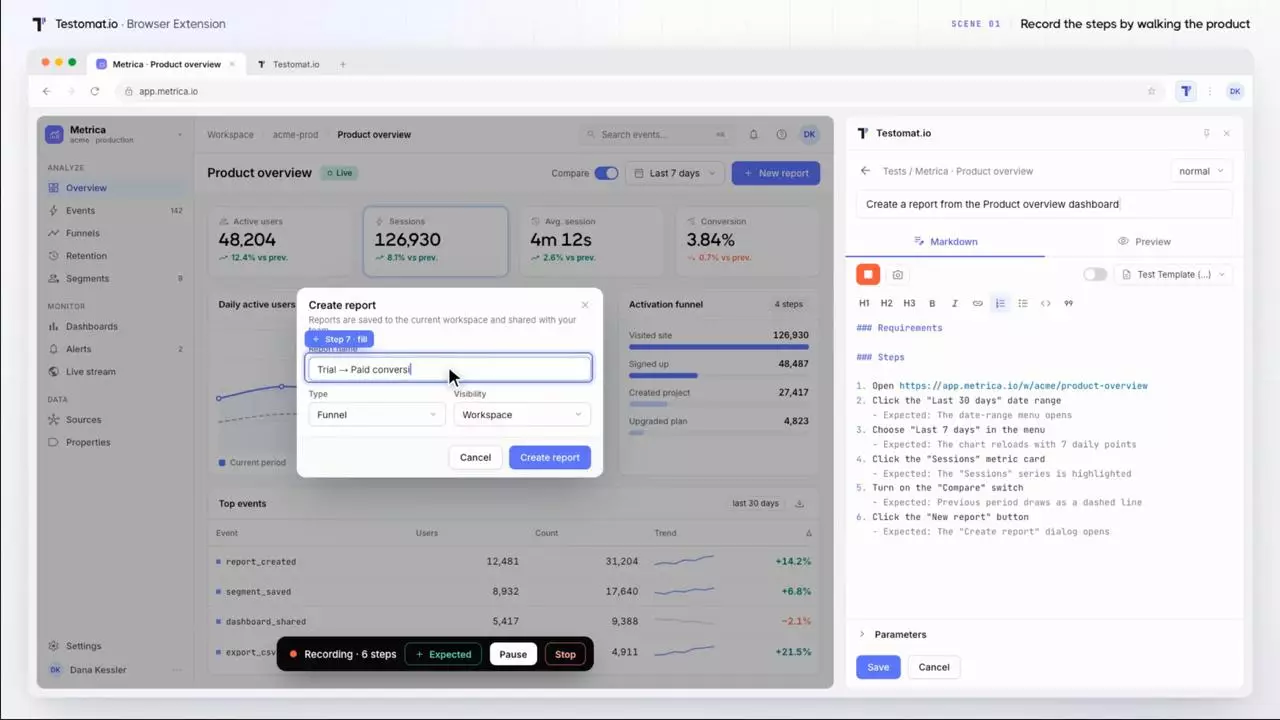
When AI generates both the code and the tests at speed, the bottleneck moves. Writing tests is the easy part here. The real work is knowing what’s actually covered and where coverage quietly fails. Testomat.io is the reporting and visibility layer that answers those questions. It imports the tests your AI tools produce through the import automated tests workflow and keeps manual and generated tests in sync. It surfaces coverage, flaky, and ever-failing signals through test analytics and automation metrics. You can gate merges with CI/CD execution and generate cases with AI test generation.
For a tools-focused view, see the roundup of AI testing tools for vibe coders, and for the model side, the AI model testing guide.
Vibe coding will remain, and it should. It delivers real productivity gains. But speed without verification is risk delivered faster. The teams winning with AI-assisted development in 2026 are the ones who pair that speed with a testing process rigorous enough to trust it. When AI writes both the code and the tests, the hard part is knowing what’s actually covered and what quietly broke. Testomat.io imports your AI-generated tests and keeps manual and automated tests in sync. It shows you coverage, flaky, and ever-failing signals in one place, and lets you gate every merge in CI/CD, so nothing reaches production unverified. Try Testomat.io for free and see what your tests actually cover.